Traffic Calming and Diversion
Benefit: Reduces cut-through traffic and motor vehicle speeds, making it safer for people walking, biking, and rolling.
Impact: Reduces access for motor vehicles.
Welcome to the Albany ATP projects and programs survey! This survey is organized into four short parts. We encourage you to complete all four sections so your feedback can fully inform Phase 3 of the ATP. Each part offers a chance to share your priorities and help shape Albany’s active transportation future.
Part 1: Review the proposed pedestrian & trail projects and tell us which ones should be a top priority.
Part 2: Review the proposed biking & rolling projects and tell us which ones should be a top priority.
Part 3: Help the City weigh tradeoffs and decide on specific improvements.
Part 4: Review the proposed programs and policies and tell us which ones should be a top priority.
Pedestrian and trail projects are projects that make it safer and more comfortable to walk or use a mobility device in Albany. This includes projects that improve sidewalks, pedestrian crossings, and staircases, as well as shared-use trails that may also be used by bicyclists.
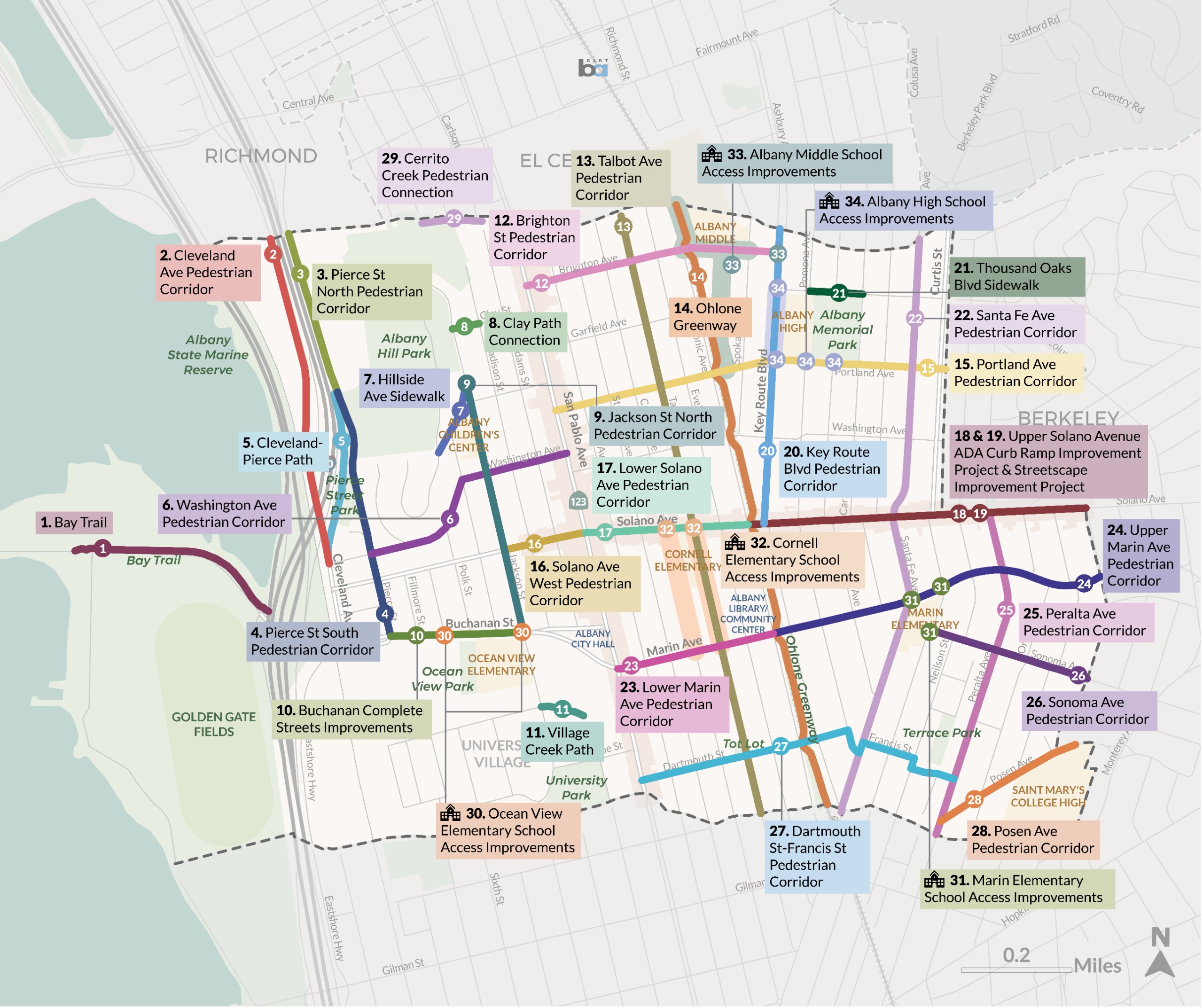
For project descriptions, project elements, and implementation status, click here.
Biking and rolling projects are projects that make it safer and more comfortable to ride a bike, scooter, or other micromobility device in Albany. This includes projects that implement bicycle boulevards, separated bike lanes, striped/buffered bike lanes, traffic calming, and intersection improvements.
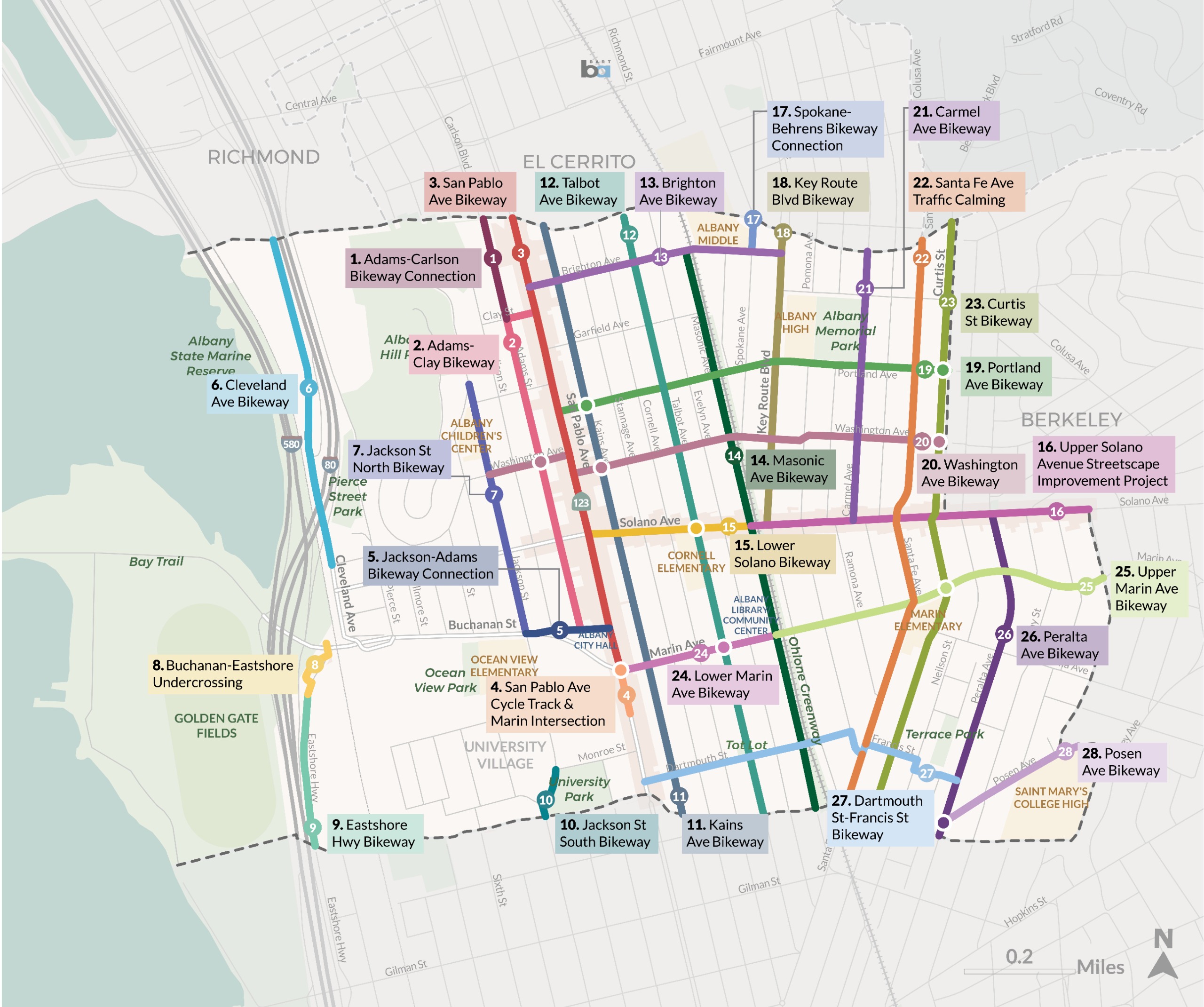
For project descriptions, project elements, and implementation status, click here.
Every project has tradeoffs that the City of Albany has to carefully weigh. Different streets serve different purposes, which informs which tradeoffs are worth making on each street. Resources are also limited, so the City needs your help prioritizing which streets and intersections receive certain improvements!
Projects can include high-impact improvements that make it comfortable for people of all ages and abilities to walk, bike, and roll. However, these projects can be costly and result in substantial impacts to vehicle traffic and parking.
Benefit: Reduces cut-through traffic and motor vehicle speeds, making it safer for people walking, biking, and rolling.
Impact: Reduces access for motor vehicles.
Benefit: Creates a more comfortable and enjoyable experience for people walking.
Impact: Reduces room for parking. In some cases, widening requires paving over existing landscaping.
Benefit: Physically separates people biking and rolling from motor vehicle traffic, improving safety for all ages and abilities.
Impact: Reduces room for on-street parking and travel lanes.
Place a marker on the map at locations you want to see:
 Traffic calming and diversion
 Widened sidewalks
 Protected bikeways
In addition to on-the-ground projects, the Active Transportation Plan includes programs that will help further the Plan’s four goals. Programs are actions that are implemented as part of staff workplans, such as education and outreach, maintenance, and citywide upgrades.
The City estimated each program’s magnitude of cost (funding and staff time) and the magnitude of benefit it would provide to active transportation.
Identify and implement transportation demand management strategies to support mode shift with new development.
Cost: Medium
Benefit: Medium
Improve navigation and wayfinding resources, including physical signage and online resources.
Cost: Low
Benefit: Medium
Continue to support traffic-safety educational programs, including existing partnerships with Alameda County, AUSD, and other stakeholders.
Cost: Low
Benefit: Medium
Update the traffic calming and speed management program to implement improvements proactively through an evaluation process.
Cost: Medium
Benefit: High
Conduct a citywide speed study and evaluate potential speed limit reductions permitted under recent state law.
Cost: Medium
Benefit: Medium
Continue to implement recommendations of the City of Albany Street Lighting Evaluation (2024).
Cost: High
Benefit: Medium
Install additional bike parking at high-activity locations citywide.
Cost: Low
Benefit: Low
Develop programmatic guidelines for the implementation of intersection treatments including “No Right on Red” restrictions.
Cost: Medium
Benefit: Medium
Maintain clear visibility at intersections and driveways through installation of raised elements (curbs, posts, bumps) in high-activity areas to ensure adequate sightlines.
Cost: Medium
Benefit: High
Establish dedicated traffic safety funding, distinct from maintenance and capital project funding, to address traffic safety issues based on regular collision safety analysis and monitoring.
Cost: High
Benefit: Medium
Continue ongoing ADA program upgrades.
Cost: High
Benefit: Medium
Implement a bikesharing or micromobility program, including potential partnerships with regional or neighboring jurisdictions.
Cost: Medium
Benefit: Medium